

Stone Veneer and Brickwork Ideas for Exterior Homes
Stone veneer and brickwork can change the whole read of a home. Used well, they add weight, shadow, texture, and a sense of permanence. Used without a plan, they can make the facade feel busy or disconnected from the rest of the architecture.
Strong exterior stone work starts before the first piece is set. Where should the stone begin and stop? What should happen at windows, columns, corners, steps, and garage doors? Should the stone be a base, a feature wall, an entry frame, or a fireplace element? Those choices decide whether the home feels polished or patched together.
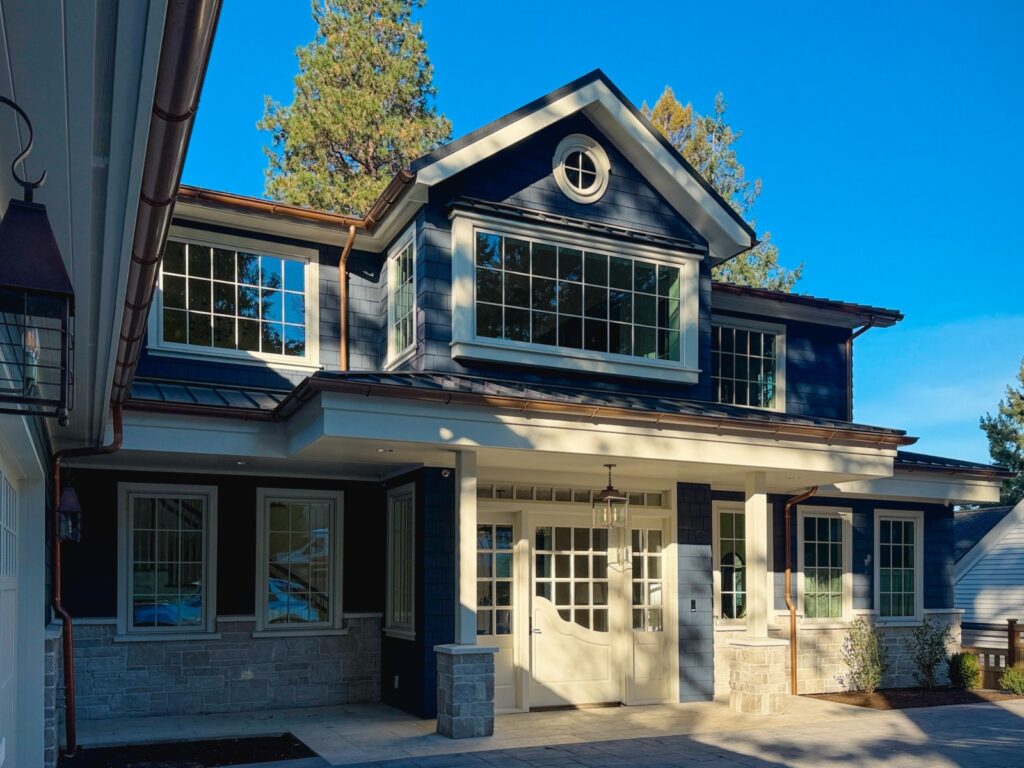
What stone veneer does for an exterior facade
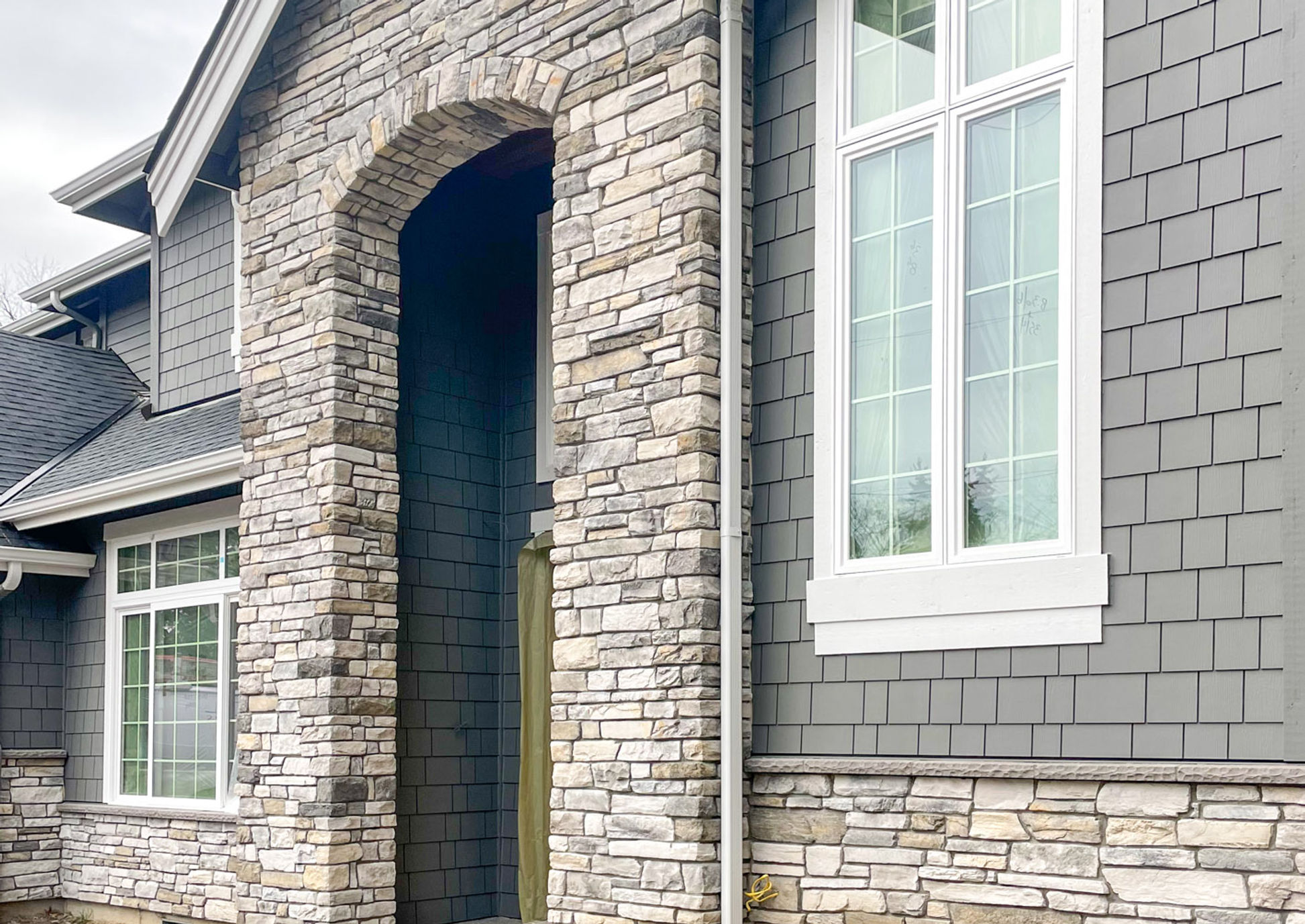
Stone veneer is not only a decorative skin. On a house exterior, it changes proportion. A stone base can make a tall wall feel more settled. Stone around an entry can draw the eye to the front door. A vertical stone feature can break up a wide facade. Around a fireplace, stone can become the center of the room or the exterior wall.
That is why the strongest stone veneer siding projects are not random. The stone has a job. It supports the composition, frames a view, protects a high-contact area, or adds texture where flat siding or smooth stucco would feel too quiet.
For homeowners comparing stone veneer, brickwork, stucco, and siding, the important question is not which material is “best.” It is which material belongs in each part of the house.
Where stone works best
Stone veneer is most effective when it is used where the architecture already wants weight or attention.
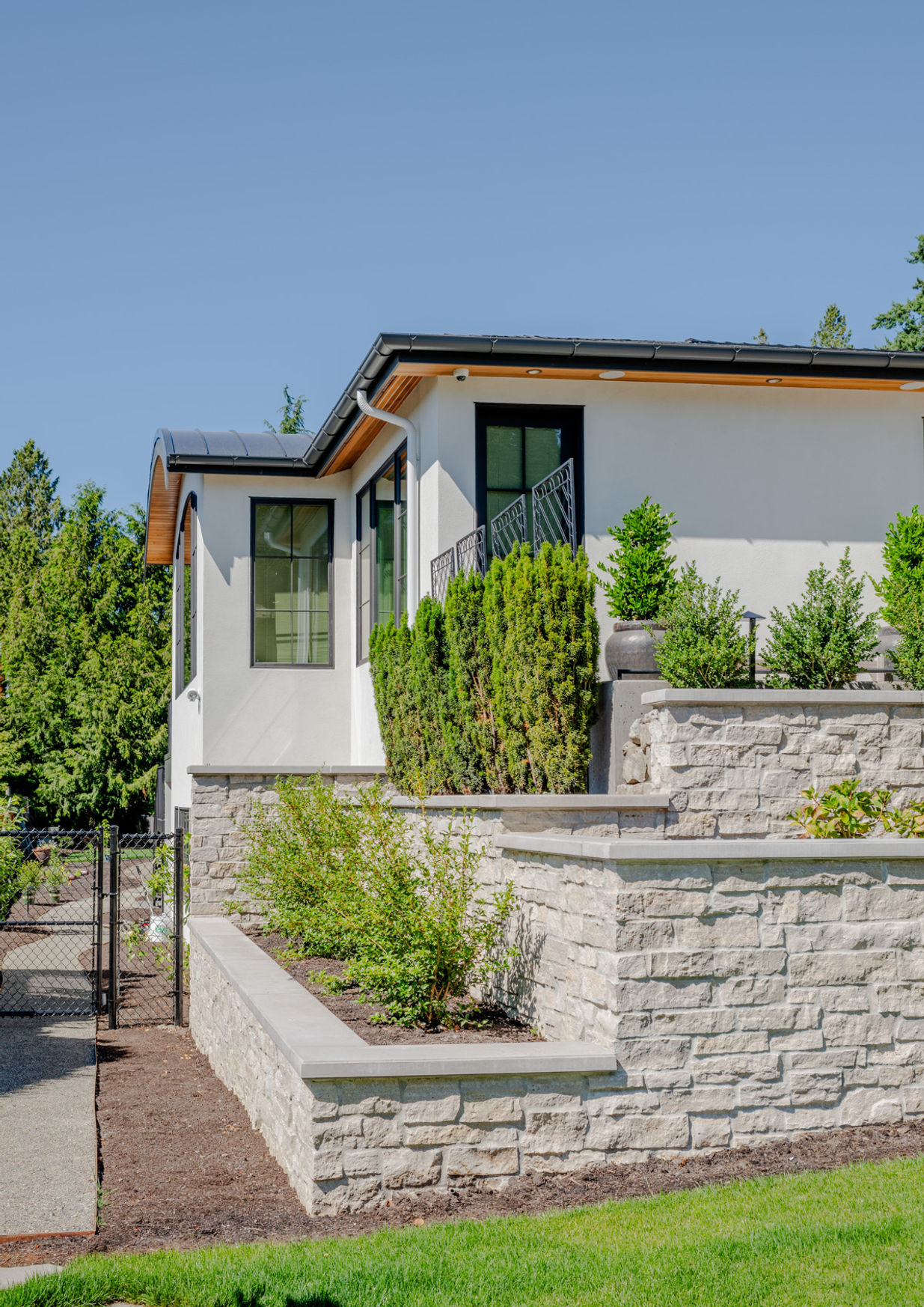
- At the base of the home: stone can visually anchor the facade and protect the lower wall from feeling too plain.
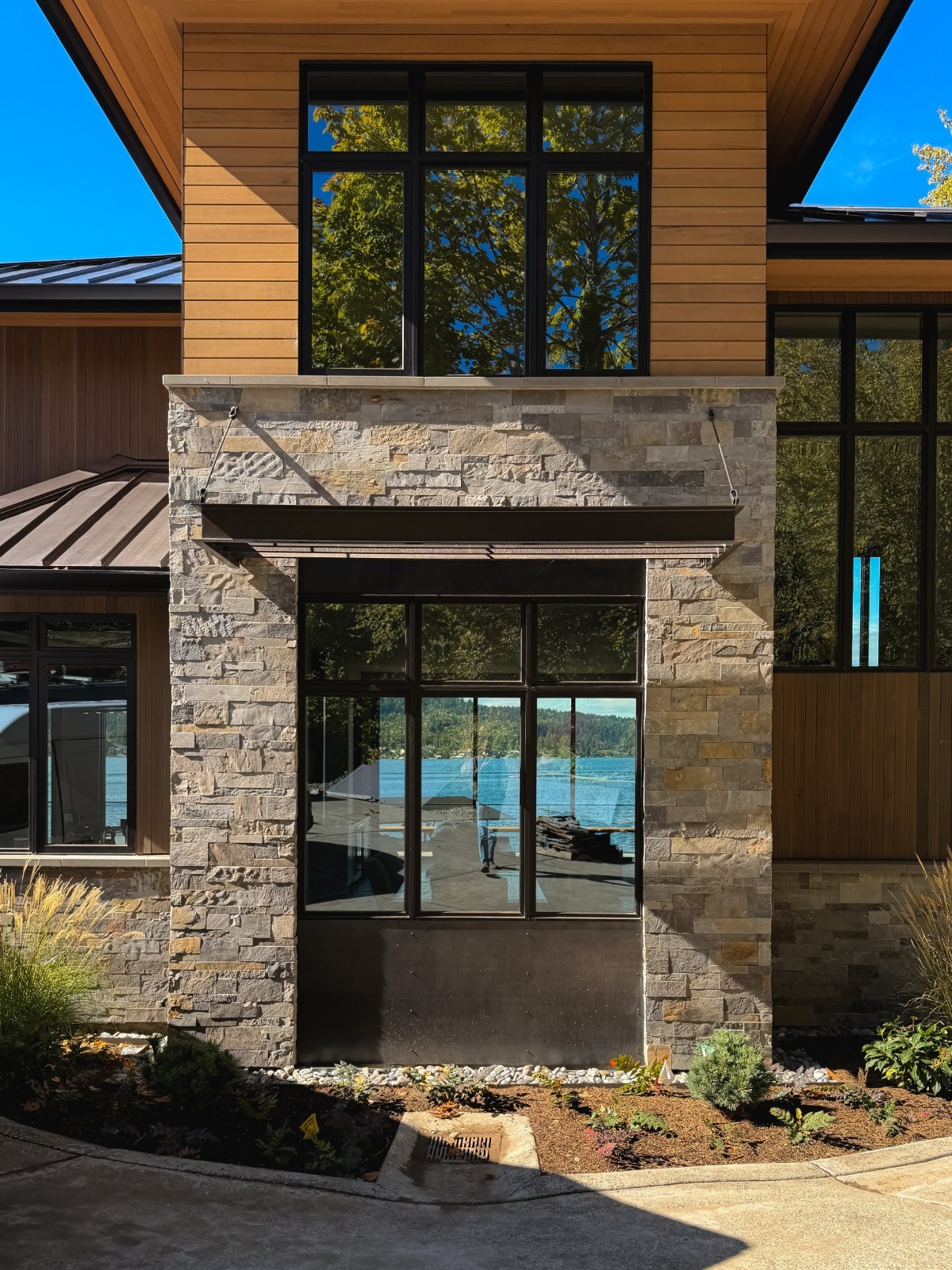
- Around the entry: stone columns, side walls, or portal details can make the front door feel intentional.
- On columns and piers: stone adds mass to structural-looking elements.
- On a fireplace: stone masonry creates a natural focal point inside or outside.
- As one accent plane: a single stone wall can be stronger than stone scattered everywhere.
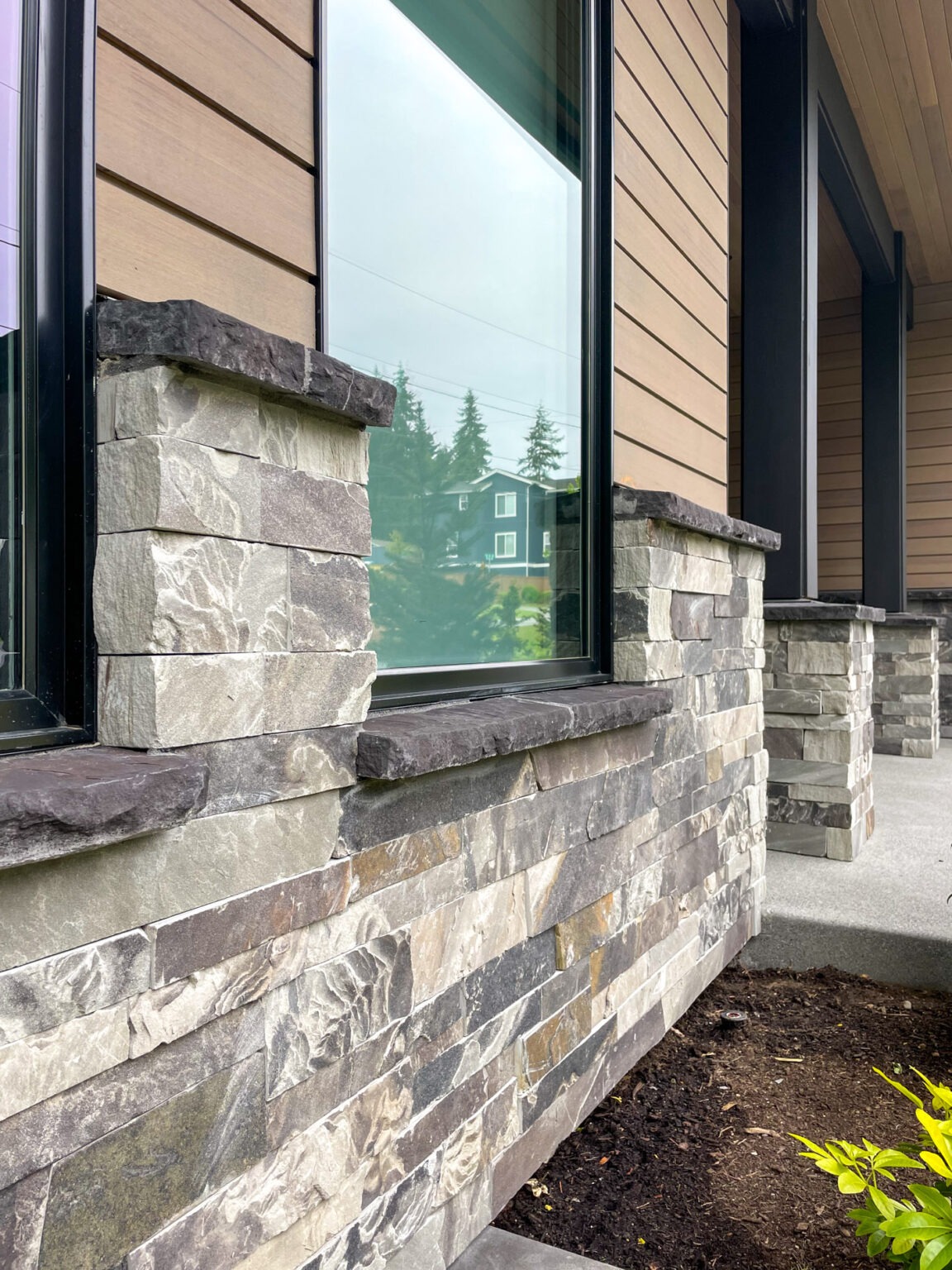
The risk is overuse. If every wall, column, corner, and gable gets the same heavy treatment, the stone stops looking special. A cleaner approach usually works better: choose the places where stone has the most visual reason to be there.
Stone veneer siding vs. a full masonry look
Searches for stone veneer siding often mix two different ideas. Some homeowners want the look of a full stone house. Others want a modern exterior where stone works with siding, stucco, or brick. Those are different design goals.
A full masonry look feels heavier and more traditional. It can be beautiful, but it needs careful proportion so the home does not feel dark or overloaded. A mixed-material exterior gives more control. Stone can stay concentrated at the base or entry while stucco, siding, or brick carries the larger wall planes.
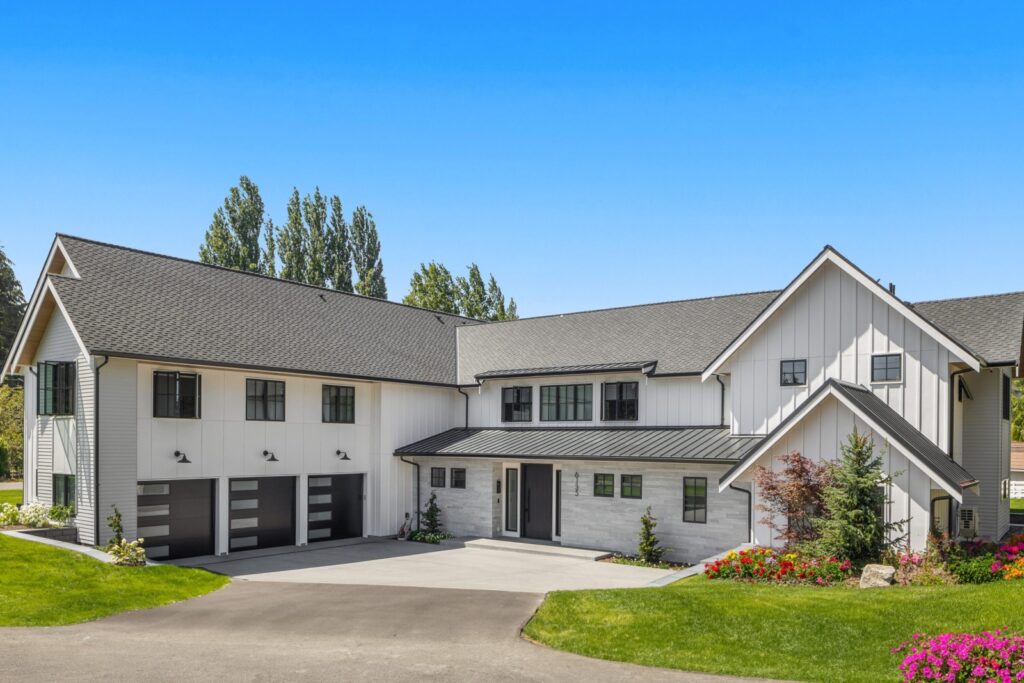
For many Northwest homes, the mixed approach is more flexible. It lets the exterior stay warm, modern, or traditional without relying on one material to do everything.
How to combine stone veneer with stucco, siding, and brickwork
Good combinations come down to hierarchy. One material should lead. The others should support it.
If the home has smooth stucco, stone can add texture at the base or near the entry. If the home has warm siding, gray stone can keep it from feeling too soft. If brickwork is part of the design, stone should not fight it. Brick has a smaller rhythm and a more regular pattern, while stone veneer usually feels more irregular and natural. Placing them side by side without a transition can look abrupt.
The joint between materials matters as much as the materials themselves. Corners, window returns, steps, caps, rooflines, and patio edges need to be resolved before installation. The eye notices those details even when the homeowner cannot name them.
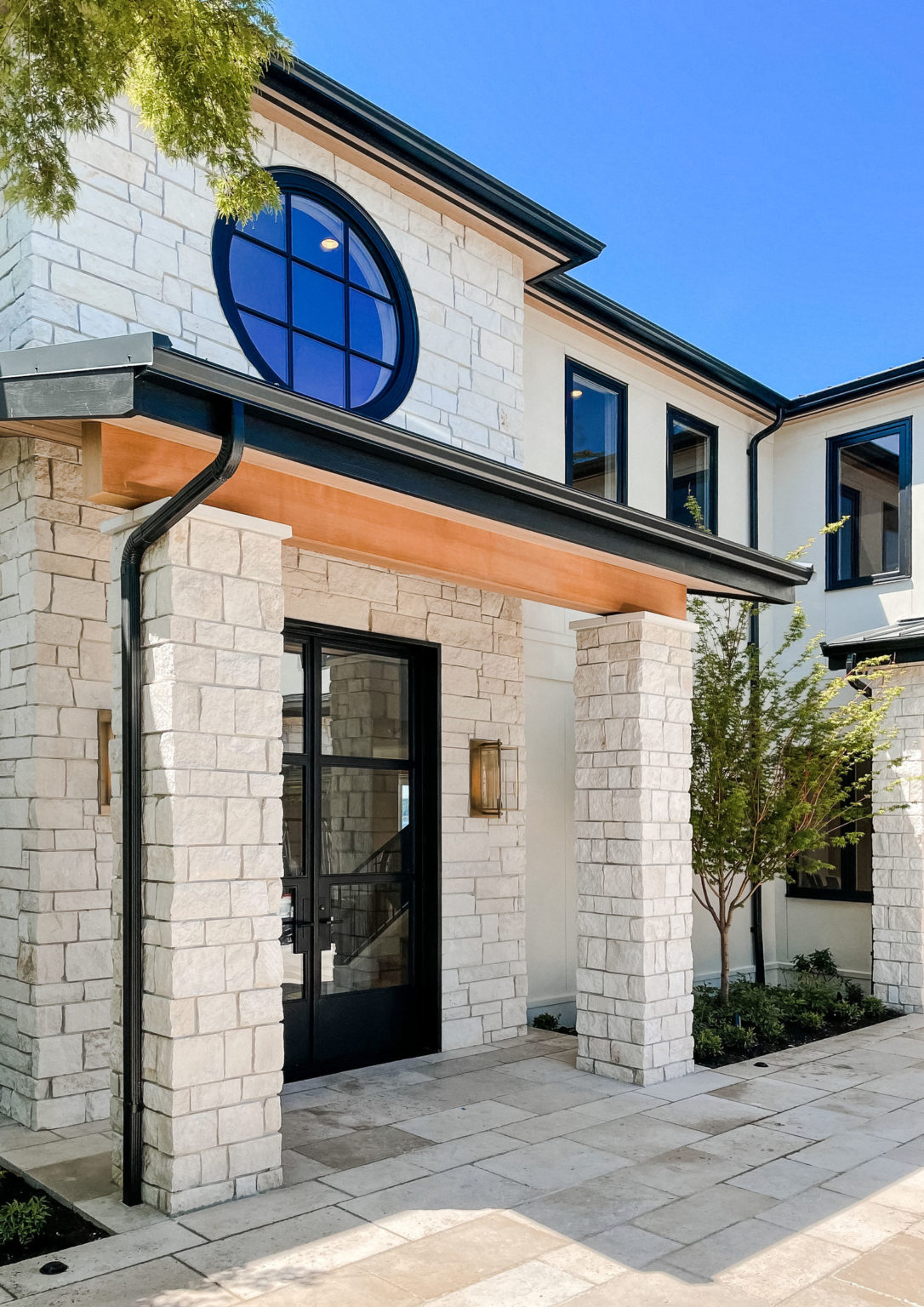
Choosing color, scale, and pattern
Stone veneer looks different in a showroom than it does across a full exterior wall. A small sample can feel calm up close, then become busy once it wraps a large facade. The size of the pieces, the contrast between stones, the depth of the joints, and the color of the surrounding stucco or siding all change the final result.
Light stone can brighten an entry and make a facade feel more open. Darker stone can make the base of a home feel stronger, but it needs enough glass, trim, or siding around it so the exterior does not become heavy. Larger pieces usually feel more modern and architectural. Smaller, more varied pieces can feel warmer and more traditional.
Pattern matters too. A stacked stone look creates strong horizontal lines. A more irregular fieldstone look feels softer and more natural. Brickwork is more orderly, which is why it can be useful on homes with crisp geometry. The material should match the rhythm of the house, not just the color palette.
Traditional and modern stone veneer examples
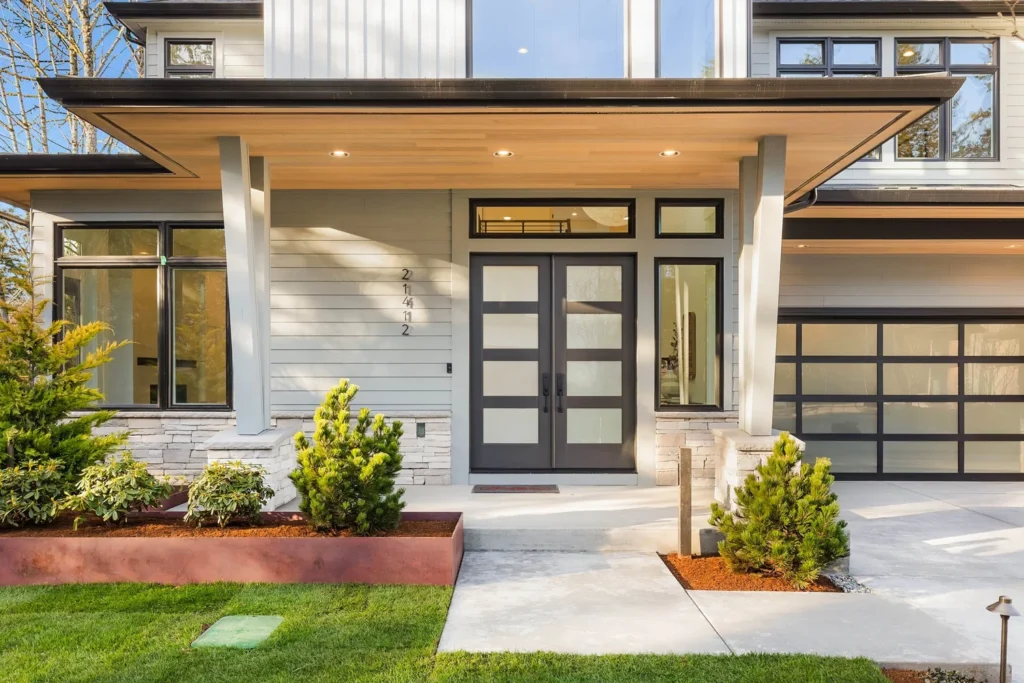
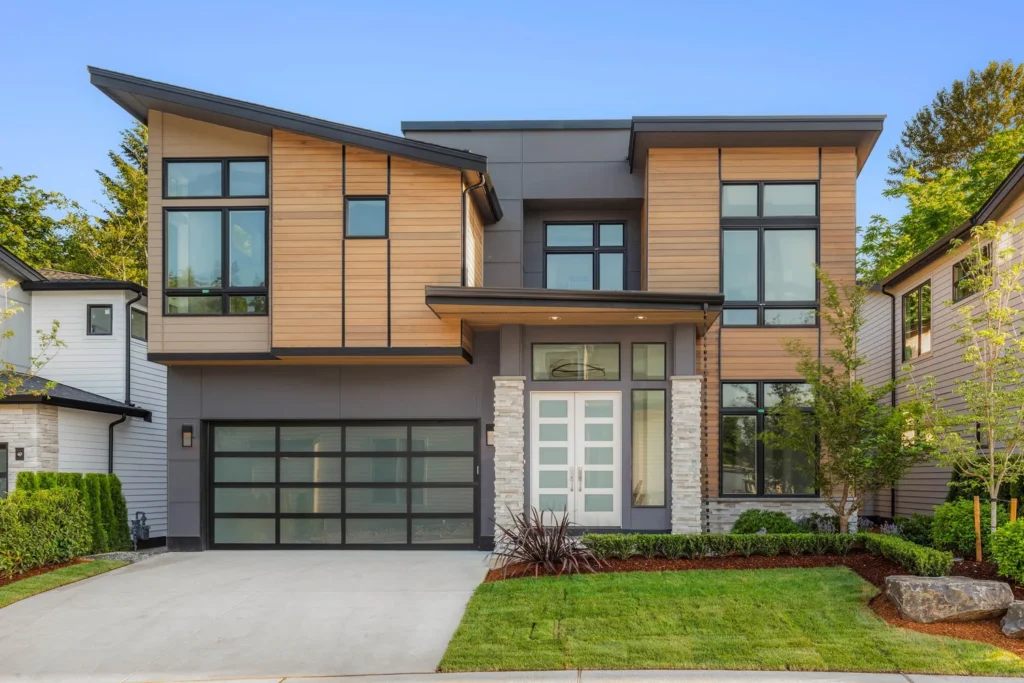
Traditional exteriors often use stone as a base, around the entry, or on heavier columns. The stone creates a sense of stability. The rest of the home can then use siding, trim, and windows to bring in detail.
Modern exteriors usually need more restraint. A clean stone panel, a single vertical feature, or a simple base course can be enough. The stone should sharpen the architecture, not cover it.
Installation details homeowners should ask about
Stone veneer installation is not just setting stone on a wall. The wall behind it still has to manage water, movement, and weight. Before work starts, homeowners should understand how the contractor plans to handle the base, transitions, caps, flashing, drainage, and joints.
Useful questions include:
- Where will water go if it gets behind the veneer?
- How will the top of the stone be capped or protected?
- How will the stone meet stucco, siding, brickwork, windows, and doors?
- What happens at corners and steps?
- Will the color and size of the stone fit the scale of the house?
- How will the finished work be cleaned and protected?
These questions are not about making the homeowner the installer. They are about making sure the finished work is planned as part of the house, not just attached to it.
Fireplace stone veneer and interior masonry
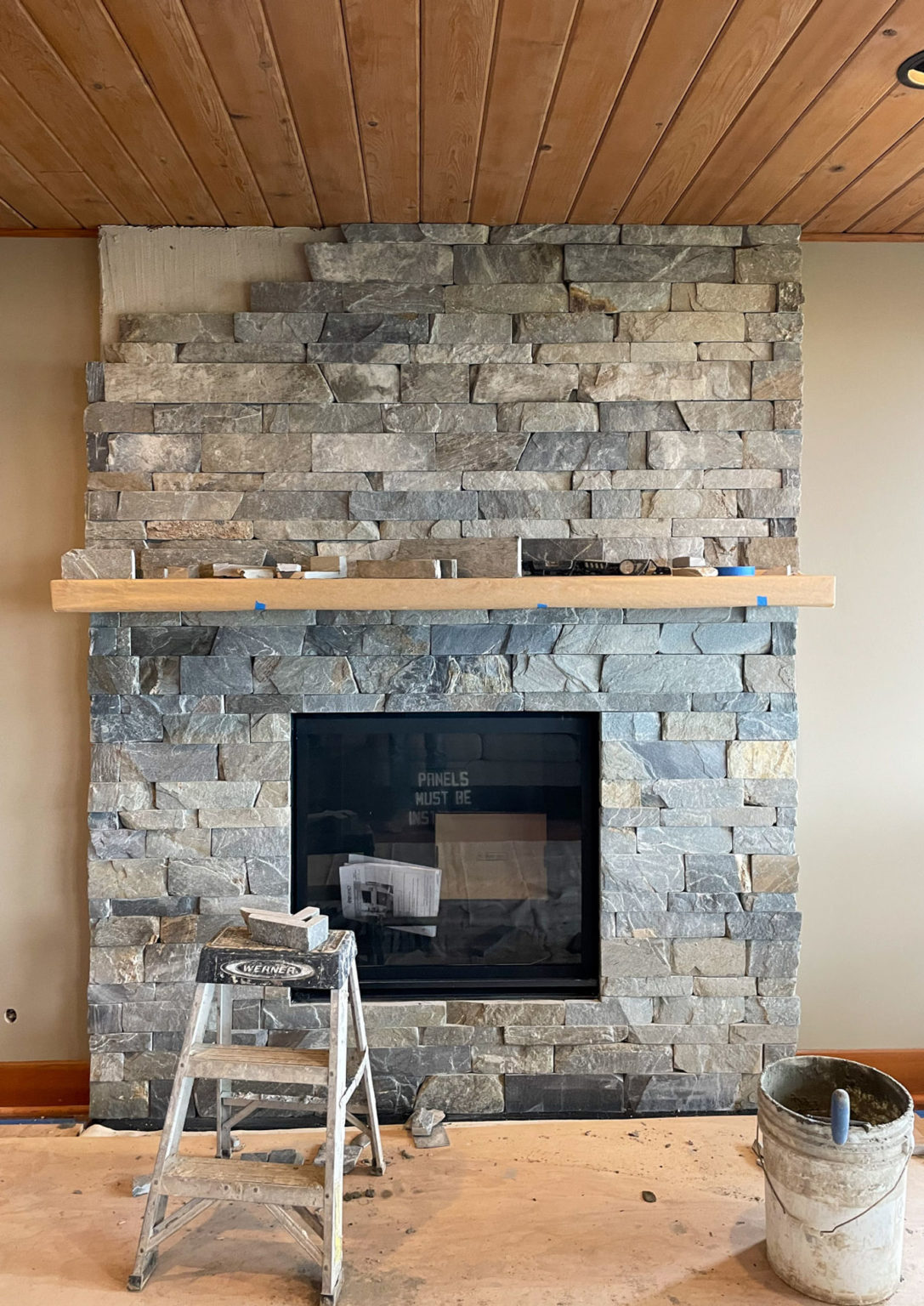
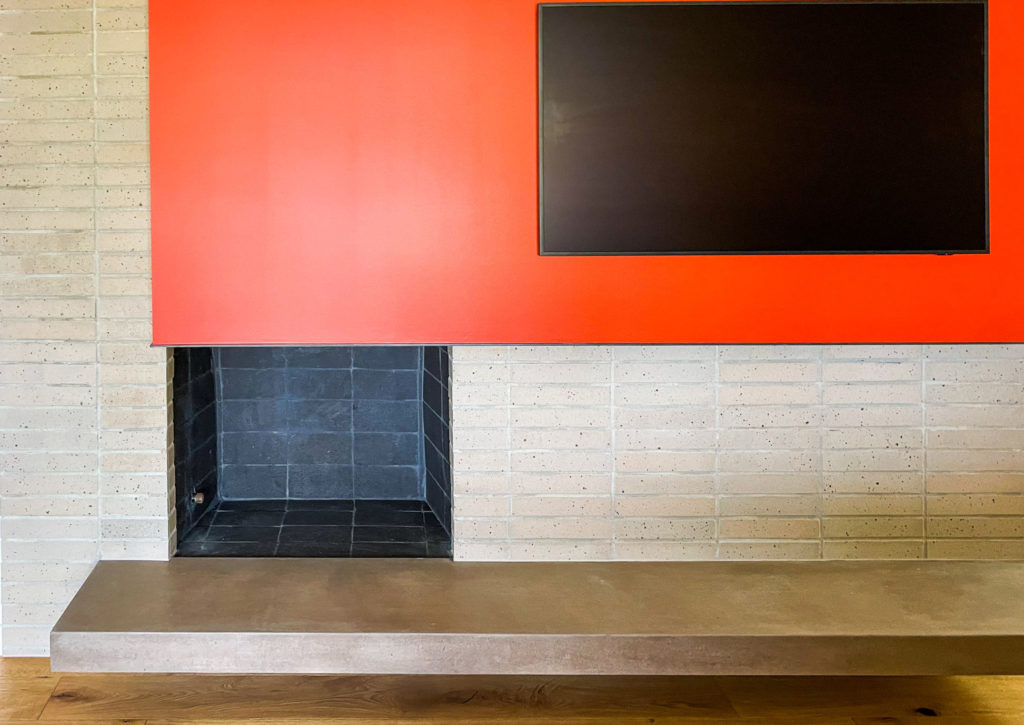
Stone veneer fireplace searches are common because the fireplace is one of the few places where people want real texture indoors. The same design rules still apply. The stone should match the room, the hearth, the ceiling height, and the amount of wood, glass, or painted surface around it.
A tall stone fireplace can feel warm and solid. A flat modern fireplace can look better with quieter brickwork or a cleaner stone pattern. The material should support the room’s mood, not overpower it.
Stone veneer cost factors
Exact stone veneer cost depends on the site, the material, access, prep work, and the complexity of the details. A small fireplace face is different from a large exterior base. A flat wall is different from a facade with windows, corners, columns, steps, and roof transitions.
The main cost factors are usually:
- The amount of wall area being covered.
- The type, size, and pattern of stone or brick.
- How much surface preparation is needed.
- How many corners, caps, openings, and transitions are involved.
- Whether the work is interior, exterior, high access, or close to landscaping.
- How much matching is needed against existing materials.
A good estimate should explain the scope clearly. It should also separate the visible finish from the details that make the finish last.
Brickwork still has its place
Stone is not always the right answer. Brickwork can be cleaner, quieter, and more architectural when the home already has strong straight lines. Brick can also work well where the design needs a steady rhythm instead of the irregular face of stone.
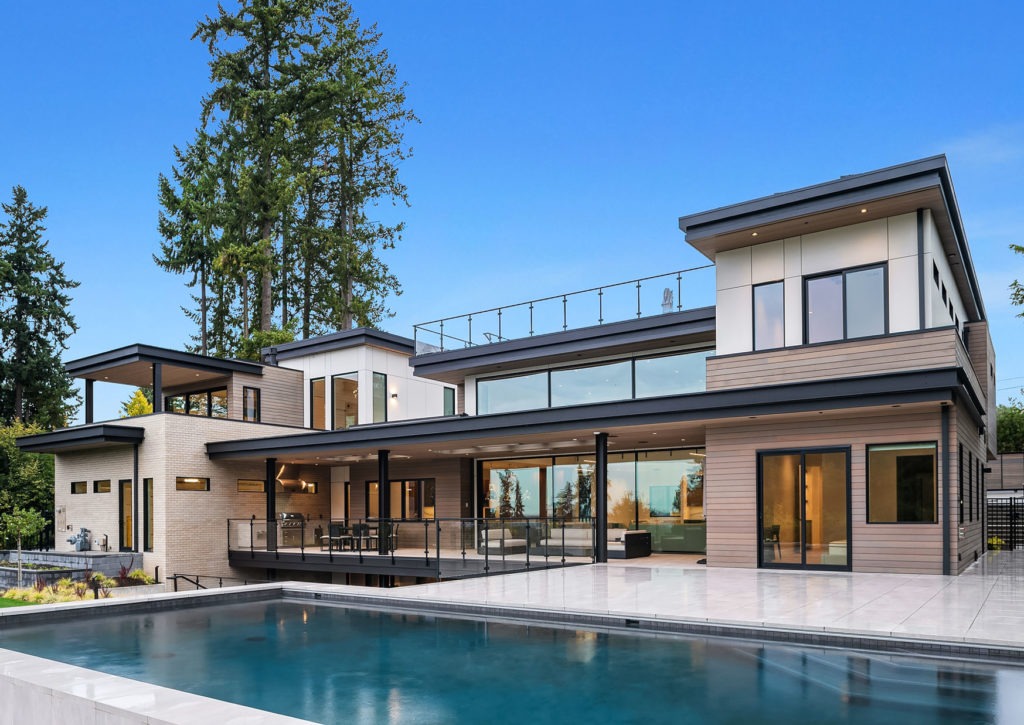
That is why stone veneer and brickwork should be chosen together, not separately. One gives a rougher natural texture. The other gives order and pattern. A strong exterior design knows which one should lead.
Project examples from Petrus Stucco and Masonry
For exterior stone veneer ideas, start with Berkshire Stone, Black Horse, Bridle Trails, and The Douglas Stone. For stronger fireplace and masonry examples, look at Sammamish Waterfront, Simple K2, and Pewter Brick.
If you are planning a facade update, a practical first step is to decide what the stone should do: ground the house, frame the entry, warm up the exterior, create a fireplace feature, or connect several materials into one clean design.
Request a stone veneer or masonry estimate or browse more Petrus stucco and masonry projects.